
(AAM)
Advanced Air Mobility
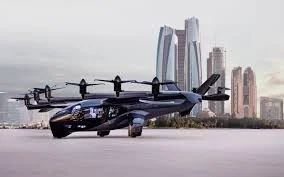
is an umbrella term for an aviation sector utilizing highly automated electric vertical take-off and landing (eVTOL) aircraft. AAM includes Urban (UAM) within cities and suburbs, Regional (RAM) between towns or regions, Traditional (TAM) legacy runway/helipad, and Unmanned Traffic Management (UTM). AAM (often referred to as air taxis) and its related infrastructure transports passengers/cargo safely, quickly, and efficiently, to reduce traffic congestion and environmental impact, with a target of enabling a flourishing industry by 2030.
Key Aspects of AAM:
Vehicles: Primarily electrically powered, quiet, and capable of vertical takeoff and landing (VTOL).
Applications: Passenger transport (air taxis), cargo delivery, public services, and emergency medical services.
Scope: Encompasses both intra-city (Urban Air Mobility) and inter-city (Regional Air Mobility) transportation.
Infrastructure: Requires specialized infrastructure, including vertiports (designated areas for landing and takeoff).
Industry Development & Regulation:
Federal Aviation Administration (FAA): Working to safely integrate these vehicles into the National Airspace System, collaborating internationally with countries like the UK, Canada, Australia, and New Zealand.
NASA: Providing data and research to support electric air taxi development and infrastructure.
Investment: Significant global investment is focused on developing over 1,100 eVTOL concepts.
Goals: Enhancing connectivity, increasing transportation options, improving environmental sustainability, and lowering travel costs.
Key Differences Between Terms in AAM:
AAM (Advanced Air Mobility): The over-arching industry term for all new aviation technologies, including unmanned delivery drones, eVTOLs, and infrastructure. It covers both urban and rural, local, and regional transport.
UAM (Urban Air Mobility): A specific subset of AAM focusing on low-altitude operations in and around metropolitan areas, specifically designed for short-distance passenger commuting and cargo delivery.
RAM (Regional Air Mobility): A subset of AAM focusing on connecting larger distances, such as connecting suburbs, smaller towns, and rural areas that are currently not served by large airports.
TAM (Traditional Air Mobility): 20th century aviation that has developed and grown worldwide as we know it today moving people and goods via airport runways and helipads.
UTM (Unmanned Traffic Management): A cloud-based traffic management system designed to handle the high volume of automated/unmanned vehicles in AAM/UAM.
xTM (Extensible Traffic Management): A general term used by the FAA for the future cooperative operating environment that includes UTM and other management systems.
eVTOL (Electric Vertical Takeoff and Landing): The type of aircraft commonly used in AAM/UAM/RAM.