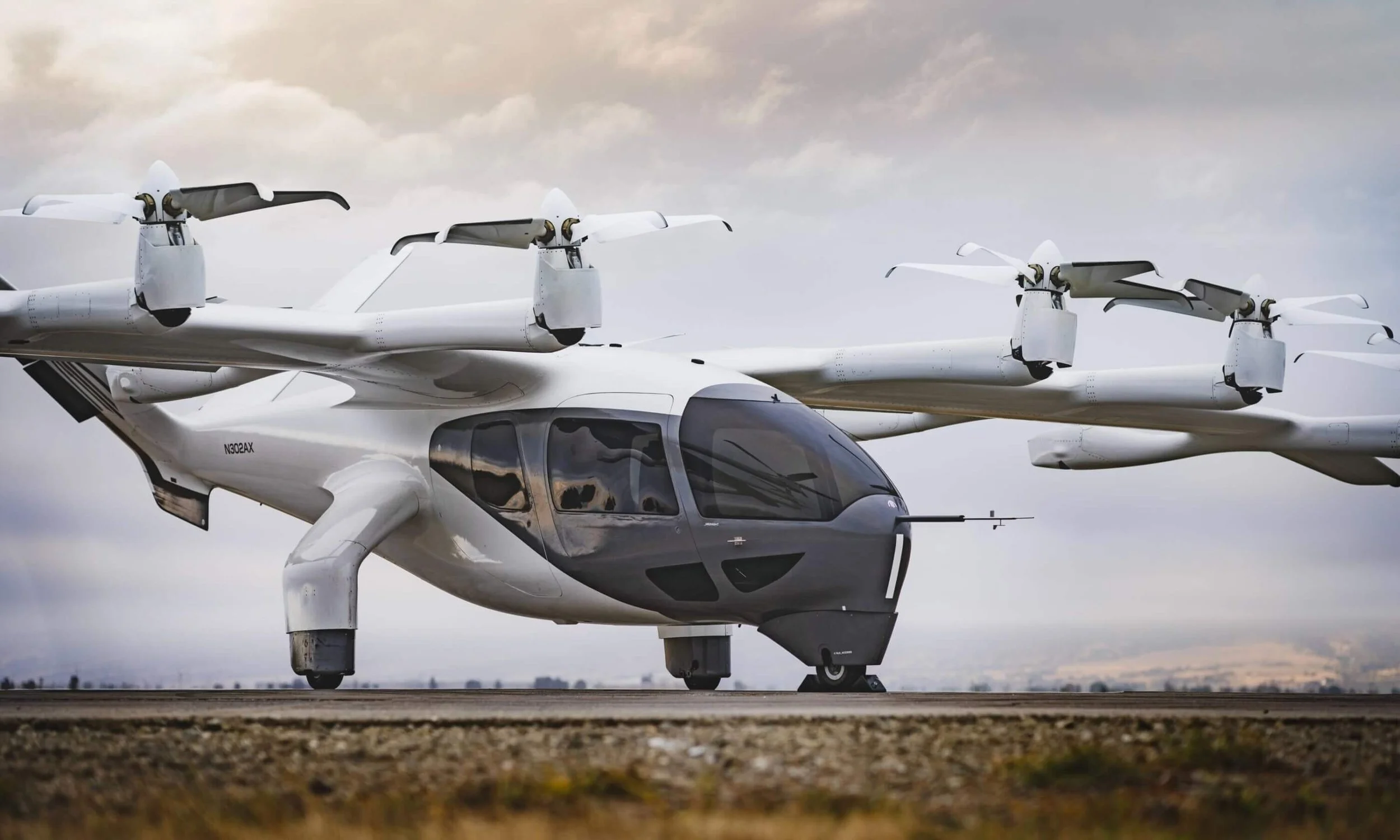
(eVTOL)
Electric Vertical Take-Off & Landing
are battery-powered, often autonomous, vehicles designed for rapid urban air mobility, offering quiet, sustainable, and fast point-to-point transportation. They represent a major advancement in aviation, aiming to reduce traffic congestion and carbon emissions, with typical designs carrying 2–6 passengers at speeds around 150 mph.
Key Aspects of eVTOL Aircraft
Benefits: These vehicles provide quieter operation than helicopters, lower maintenance costs, higher safety redundancy through distributed electric propulsion (DEP), and zero direct operational emissions.
Use Cases: Primary applications include "air taxi" city commutes, airport shuttles, emergency medical services, and regional logistics.
Performance: While ranges vary, many models target 60–100+ miles on a single charge. Speeds for typical passenger models hover around 150–250 mph.
Comparison to Helicopters: Unlike helicopters, eVTOLs are much quieter, cheaper to operate, and use electric motors for greater efficiency.
Key Players: Major developers and stakeholders include Joby Aviation, Archer Aviation, Eve Air Mobility (Embraer), Honda, and Vertical Aerospace.
The industry is currently in the testing and certification phase, with many companies working with the FAA to begin commercial operations in the coming years.