

UVI
Urban Vertiport Infrastructure
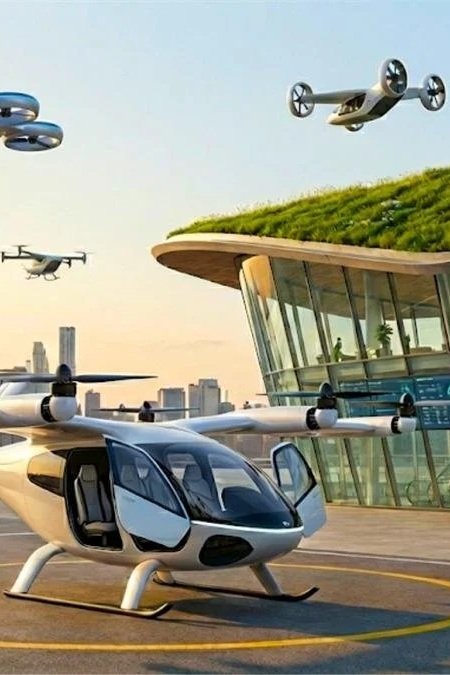
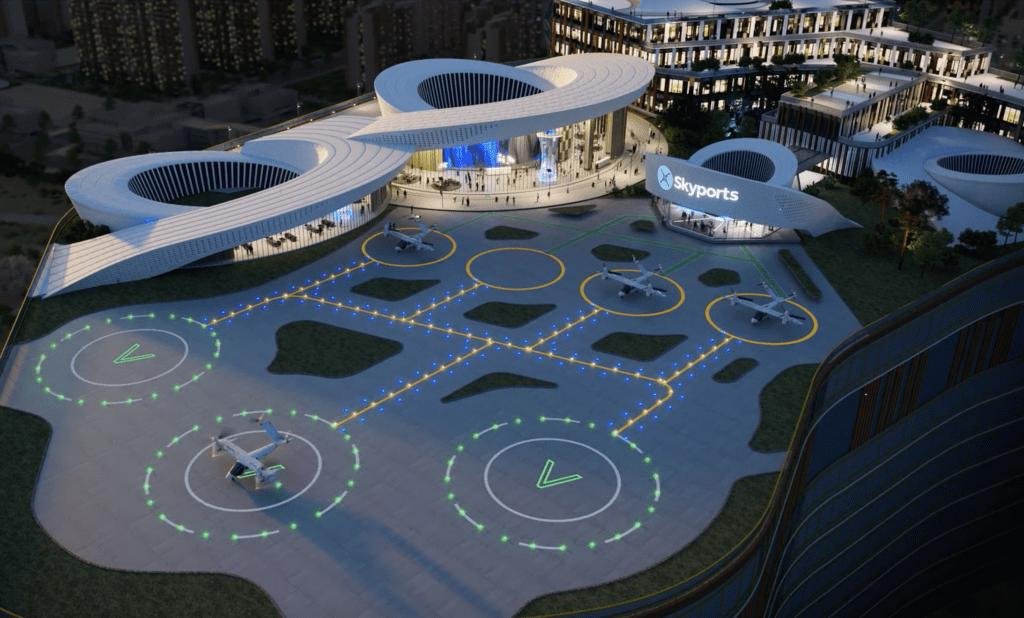
Urban Vertiport infrastructure (UVI) provides specialized takeoff, landing, and charging facilities for Electric Vertical Take-Off and Landing (eVTOL) and Battery Electric Vehicles (BEV), serving as critical hubs for Advanced Air Mobility (AAM) in urban environments. These structures, which can be retrofitted on rooftops or built on land, include passenger terminals, electric charging stations, and safety systems, with key developments underway in cities like Los Angeles and Dubai.
Key Infrastructure Components & Types
Vertiports: Similar to heliports but designed for high-throughput, electric, and often automated aircraft
Types of Facilities:
Vertihub: Large, self-contained hubs with multiple landing/parking spots, maintenance, and retail facilities.
Vertibase: Medium-sized hubs, often on existing rooftops.
Vertipad: Small, limited-function, single-pad sites.
Public Hubs: Fixed-Based Operators on and off airfield property
Core Infrastructure: Landing pads, Charging infrastructure (essential for quick turnarounds), passenger terminals, and safety equipment like crash-resistant barriers and fire suppression systems.
EV Charging: Electric Vehicle Charging Stations (EVCS) providing air and ground-based passenger vehicle electricity
Western Metropolises: San Diego, Los Angeles, Sacramento, San Francisco, Portland, Seattle, Salt Lake, Las Vegas, Phoenix, Houston, Dallas, Austin, Chicago, Miami, Washington, Philadelphia, Newark, New York, Quebec, Montreal, Vancouver, Buenos Aires, Rio De Janeiro, Medellin, Santiago
Eastern Metropolises: London, Paris, Berlin, Rome, Barcelona, Prague, Vienna, Budapest, Amsterdam, Moscow, St. Petersburg, Kazan, Dubai, Abu Dhabi, Doha, Istanbul, Muscat, Cairo, Johannesburg, Marrakech, Tel Aviv, Baghdad, Tehran,Tokyo, Seoul, Hong Kong, Shanghai, Bangkok, Singapore, Beijing, Hanoi, Chongqing, Sydney, Melbourne, Brisbane, Aukland, Wellington, Queenstown
Design and Site Considerations
Location: Integrated into densely populated areas, often connected to transportation hubs like airports, railways, and subway stations to enable quick, multi-modal urban commuting.
Planning Constraints: Siting must account for airspace integration, community acceptance, environmental noise, and physical space constraints on roofs.
Standards: The Federal Aviation Administration (FAA) establishes safety and design criteria, including specific requirements for vertiport lighting and marking.
Operational and Safety Features
Real-time Management: Integration with existing air traffic control systems, utilizing advanced data links for traffic flow and safety.
Charging & Maintenance: High-speed charging systems are critical, along with maintenance repair and overhaul (MRO) facilities.
Safety Requirements: Designated takeoff/landing corridors, collision avoidance technology, and emergency procedures.
Industry Development
Key operators like top-floor garages, ancillary skyports, FBO’S, and airlines are collaborating on developing these facilities.
Major projects are underway in urban centers like Los Angeles and Dubai, aiming for operational readiness as early as 2027.
Construction often faces challenges related to zoning and adapting to existing urban landscapes.
Driven by curiosity and built on purpose,
this is where bold thinking meets meaningful execution.
Let’s create something meaningful together.