
(LG)
Linear Generator
delivers local power to capacity constrained companies, communities, and sites where power won’t be available for years
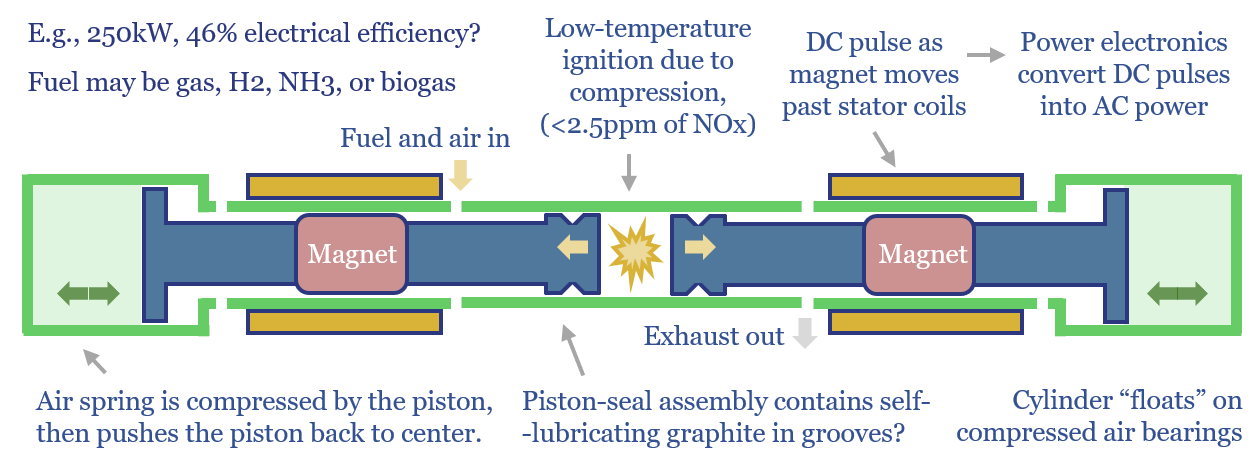
They are a high-efficiency power technology that converts linear motion (typically from compressed gas) directly into electricity, bypassing the need for rotating turbines. It provides flexible, onsite power using natural gas, biogas, or hydrogen, producing near-zero NOx emissions. Key for microgrids and data centers, it offers fast, modular deployment.
A Linear Generator delivers local power to capacity constrained companies and communities.
Key Aspects of Linear Generation:
Technology & Efficiency: By utilizing a free-piston design where magnets move through stator coils, linear generators achieve high efficiencies (around 46% net AC), similar to fuel cells
. It eliminates rotary components, reducing friction and maintenance.
Applications:
Commercial/Industrial: Used for 250kW units by businesses, data centers, and hospitals, often providing better economics than the grid.
Renewable Firming: Helps balance variable renewable energy (wind/solar) by providing rapid, dispatchable power.
Mobility: Considered as range extenders for electric vehicles.
Mainspring Energy: Leading the commercialization of this technology with products that can operate on various fuels, including 100% hydrogen, without hardware changes.
Benefits: Features include very low NOx emissions (<1.5 ppmvd), fast load-tracking, black-start capabilities, and modular scalability to multi-megawatt systems.
Linear Generators are increasingly seen as a vital tool for achieving local, reliable, clean power.
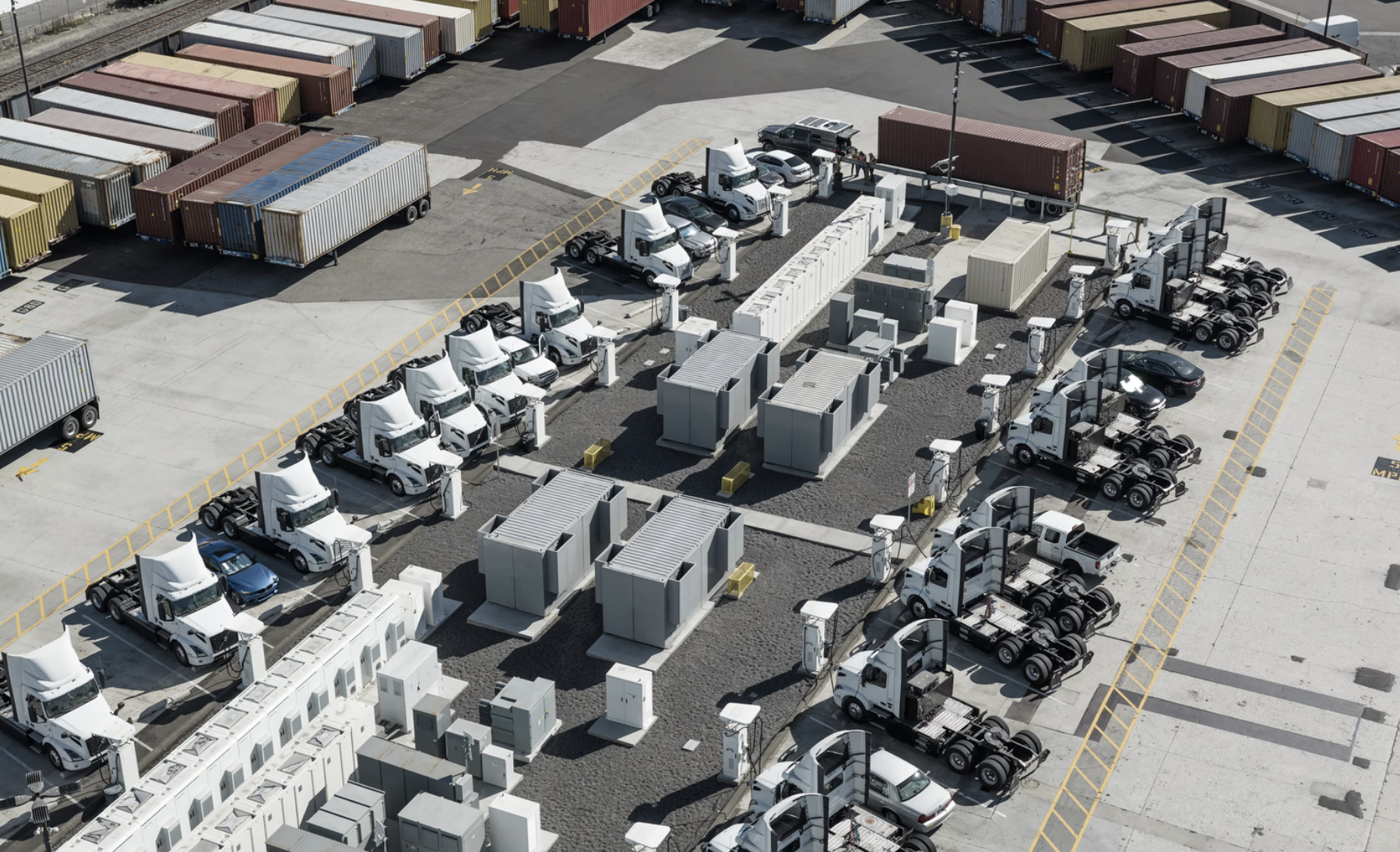
Control Your Sites Energy Strategy
1) Deploy quickly: Deploy reliable, scalable onsite power in months, not years, with modular units that permit and install quickly.
2) Add flexibility: Deliver prime power, solar firming, diesel reduction or elimination, grid services, and multi-fuel operation with a single, fully dispatchable asset.
3) Control costs: Lower CapEX, and higher efficiency combine to deliver a lower levelized cost of electricity (LCOE) than alternative technologies. Lower OpEX, lower maintenance costs, and Total Cost of Ownership (TCO).
4) Increase resilience: Deploy fuel redundant power that can operate independently or in coordination with the grid.
5) Reduce emissions: Generate low-emissions power today and transition seamlessly to zero-carbon fuels over time.