
Energy Management Systems
Intelligent Energy Management Systems (EMS) improved energy efficiency, cost savings, sustainability benefits, and enhanced control over energy usage.
The EMS energy solution starts from the coordinated development of 'people, equipment, energy, and environment'.
EMS focuses on 'low carbon and intelligence' and integrates the industry attributes of diverse market segments. It also selects the most representative application scenarios to extract five core apps with an eye towards reconstruction and decoupling.
EMS solutions emphasizes practicality, ease of use, expandability, and scalability. They are designed to deliver a variety of precise energy saving and smart energy management systems rapidly and at minimal cost, while also accommodating future growth.
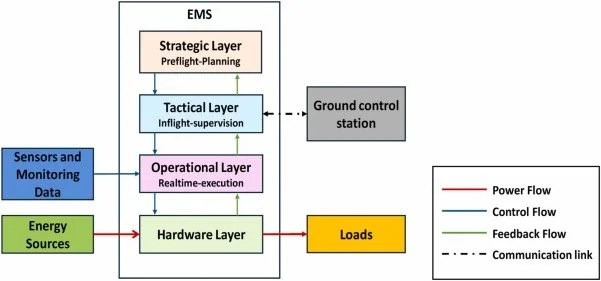
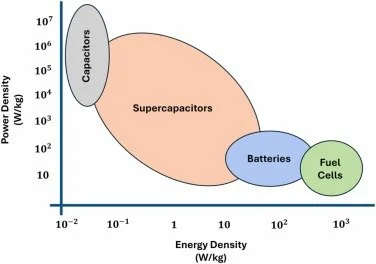
The electrification of aviation is rapidly progressing with the rise of advanced air mobility, which envisions a new era of safe, efficient, and sustainable aerial transportation through the deployment of hybrid electric vertical take-off and landing aircraft across both urban and regional environments.
Achieving this vision depends critically on the readiness and integration of onboard energy systems that can support complex and dynamic mission profiles involving distinct power and endurance demands across phases such as take-off, hover, climb, cruise, descent, and precision landing.
Central to the realization of energy optimized missions is the role of intelligent energy management systems where artificial intelligence is emerging as a transformative approach. These AI based frameworks allow distributed control of energy flow, adaptive propulsion coordination, and real time decision making across mission objectives such as minimum emissions, maximum range, or minimum energy consumption.
Energy Management Systems (EMS) for Advanced Air Mobility (AAM) are critical, software-driven systems that monitor, control, and optimize the power flow between energy storage (batteries and fuel cells), propulsions, and thermal subsystems. These systems ensure safe operation, maximize flight range for eVTOL aircraft, manage battery health, and optimize charging efficiency at Vertiports.
Key Aspects of AAM Energy Management Systems
Integrated Power Optimization: Similar to Total Energy Control Systems (TECS), modern AAM systems integrate flight control with power generation to handle complex flight phases, including vertical take-off and landing.
Thermal Management Solutions: To manage high thermal loads, solutions like those from Modine are essential to keep batteries within safe, efficient operating temperatures.
Charging Infrastructure & Power Grid Interaction: Integrated systems connect aircraft charging needs with local electrical grids, managing energy loads for efficient operation.
Hybrid and Electric Architectures: Systems manage electricity for distributed propulsion systems, often incorporating hybrid-electric components for increased range.
Advanced Concepts: Emerging research into energy augmentation, such as Optical/Infrared Power Beaming for wireless energy transfer, is being explored to support long-range, battery-limited vehicles.
Digital Integration: Comprehensive simulation platforms, such as those provided by Dassault Systèmes, are crucial for developing and validating these complex energy, thermal, and electrical systems in the digital domain.
Key Focus Areas for Effective EMS
Flight Safety: Ensuring sufficient energy for safe landings, especially in contingency scenarios.
Payload and Range: Balancing energy storage weight with payload capacity for passenger and cargo mobility.
Lifecycle Management: Monitoring battery degradation and managing fast-charging cycles.