
Design | Engineering
Financing, design, and engineering of Advanced Air Mobility (AAM) involves a mix of private venture capital, public market funding (IPOs & SPACs), and strategic investments from aerospace incumbents, with recent efforts focusing on securing debt to reach certification and commercialization. Funding continues for key players, with a focus on innovative eVTOL designs, reduced noise and wind impacts, securing regulatory approval, and building, testing prototypes.
Key Financing Sources for AAM Development
Private Equity & Venture Capital: Remains a critical source for early-stage and growth-stage companies developing novel technology.
Public Markets (IPOs/SPACs): Several OEMs have raised billions through initial public offerings, providing substantial capital for continued operations.
Strategic Corporate Investment: Incumbent aerospace giants—including Boeing, Airbus, Embraer, and Rolls-Royce—are making targeted investments to accelerate development and retain talent.
Debt Financing: As companies move closer to certification, they are increasingly leveraging debt. For instance, Eve Air Mobility secured a $150 million loan from banks like Itau and Citibank in early 2026.
Government Grants & Loans: Governments are providing support to advance technology and achieve sustainability goals. Examples include the U.S. EXIM Bank and Private Export Funding Corporation (PEFCO) providing a $15 million loan to support battery and engineering services, and the Michigan AAM Activation Fund.
Design and Engineering Cost Factors
Designing AAM aircraft requires high-fidelity prototyping and simulation to secure funding.
Prototype Development: Companies are building multiple conforming prototypes to transition to flight-test milestones (e.g., Vertical Aerospace and Eve).
Virtual Twins and Modeling: Use of platforms like 3D can reduce costs by optimizing designs and accelerating simulation before physical prototyping.
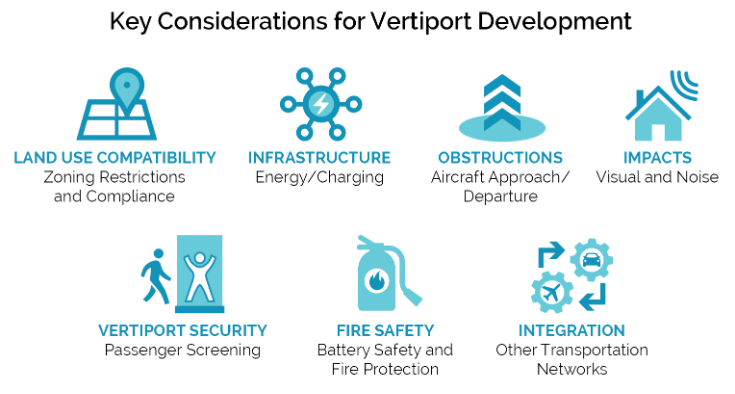
Infrastructure Design: Planning-level costs for vertiports range from $8 million to $15 million, with larger facilities exceeding $30–$40 million depending on complexity and throughput.
Safety Testing: Extensive engineering resources are focused on certification, with new FAA and regulatory frameworks shaping the design process.
Emerging Financing Structures
Pre-Delivery Payments (PDPs): Borrowing from traditional aerospace models, AAM OEMs are increasingly using PDPs to secure financing early in the manufacturing pipeline.
Export Credits: Loans supported by export-import banks for research and development are becoming more prevalent to de-risk development.
Key Challenges
Capital Intensity: Development programs can cost billions, with potential cost overruns.
Certification Timelines: Delays in achieving airworthiness certification can dry up funding, causing potential, industry-wide, and company failures.
Market Viability: Concerns exist regarding the high operating costs of initial eVTOL designs, with requirements for a 25%–45% reduction in operating costs to make them competitive with traditional alternatives.